
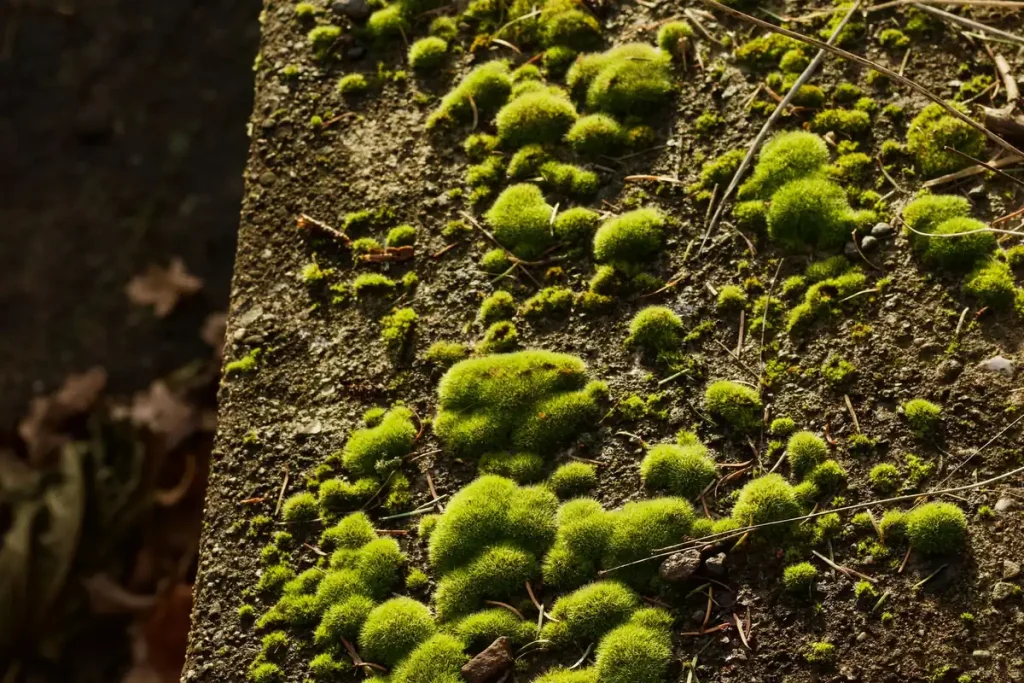
If you live in Olympia, Lacey or Tumwater, you have probably looked up at a neighbor’s roof and seen it: thick green cushions of moss tucked between the shingles, especially on the north side of the house and under big firs. Moss looks harmless, even a little charming. On a roof, though, it is one of the main reasons asphalt shingles fail years before they should.
This guide explains why moss grows so well here, what it actually does to your roof, how to remove it without causing more damage, and what you can do to keep it from coming back.
Why Moss Loves Olympia Roofs
Moss needs three things: moisture, shade and something rough to hold on to. Olympia supplies all three. The city gets around 50 inches of rain a year, most of it between October and May. Many neighborhoods, from West Olympia to Tanglewilde, are full of tall Douglas firs, cedars and maples that keep roofs shaded for much of the day. Asphalt shingles have a gritty granule surface that gives moss spores an easy place to settle.
North-facing slopes stay damp the longest because they get little direct sun in winter. Valleys, the areas around chimneys, and the lower edges of the roof near gutters collect needles and debris that hold water. That is why moss usually starts in those spots first and spreads outward.
How Moss Damages a Roof
Moss doesn’t eat shingles, but it creates conditions that wear them out quickly:
- It holds water. A layer of moss acts like a sponge. Instead of drying out between storms, the shingles under it stay wet for weeks at a time.
- It lifts shingle edges. As moss grows into the gaps between shingle courses, it pushes the bottom edges up. Wind-driven rain can then get under the shingles and reach the underlayment and roof deck.
- It clogs drainage. Moss that breaks loose washes into gutters and downspouts, causing overflows that soak fascia boards and siding.
- It speeds granule loss. Constant moisture and root-like growth loosen the protective granules that shield the asphalt from UV light.
Left alone for several years, heavy moss can cause leaks, rotted sheathing along the eaves, and a roof that needs replacement well before its expected 20 to 25 years.
What Not to Do: Pressure Washing
The fastest-looking fix is also the worst one. A pressure washer will blast moss off a roof in minutes, but it also strips granules, can break the seal strips that hold shingles down, and drives water up under the shingle laps. Many shingle manufacturers say high-pressure washing can void the warranty. If you have ever seen a “clean” roof that looks blotchy and bare a year later, pressure washing is often the reason.
Climbing onto a wet, mossy roof is also dangerous. Moss is slippery, and most falls happen on roofs that look easier to walk than they are.
The Safe Way to Remove Roof Moss
Professional moss removal is slower and gentler. Here is the process our crews follow:
- Inspect first. We check for lifted or cracked shingles, damaged flashing and soft decking so we know where to be careful and what needs repair.
- Remove by hand. Thick moss is scraped off with plastic scrapers and soft brushes, working from the top of the roof down so we don’t push debris under the shingles.
- Rinse at low pressure. A garden-hose level rinse clears loosened moss without stripping granules.
- Treat the roof. A roof-safe moss and algae treatment kills remaining spores and slows regrowth. We protect plants below and follow the product directions.
- Clean the gutters. All the moss and needles that came off the roof end up in the gutters, so we clear them and flush the downspouts.
If you want this done for you, our roof cleaning and moss removal service covers every step above, plus a photo report of your roof’s condition.
How to Keep Moss From Coming Back
You can’t change Olympia’s weather, but you can make your roof a less friendly place for moss:
- Trim overhanging branches. More sunlight and airflow help the roof dry faster after rain. Even thinning a few limbs can make a difference.
- Keep the roof clear of debris. Needles and leaves in valleys and behind chimneys hold moisture. A simple fall cleanup helps.
- Install zinc or copper strips. Metal strips near the ridge release small amounts of zinc or copper when it rains, which slows moss growth on the roof below.
- Schedule regular treatments. Most homes in our area need a moss treatment every one to two years. Heavily shaded roofs may need it every year.
- Clean gutters at least twice a year. Late fall and late spring are good times in western Washington.
When Moss Means It’s Time for a New Roof
Sometimes moss removal reveals a bigger problem. If the shingles underneath are curled, brittle, missing granules, or the decking feels soft along the eaves, cleaning may only buy a little time. In that case, a replacement with algae-resistant shingles, proper ventilation and new underlayment is usually the better investment. We cover the warning signs in detail in our guide to the signs you need a new roof.
Some homeowners also choose metal roofing for this reason. Rain and needles slide off metal easily, and moss has very little to grip.
Best Time of Year for Moss Removal in Olympia
Late summer and early fall are ideal. The roof is dry, which makes the work safer, and a treatment applied before the rains has the whole wet season to work. That said, moss can be removed and treated any time we get a few dry days in a row, including spring.
DIY or Hire a Pro?
If your roof is low-pitched, single-story and only lightly mossy, you may be able to brush it off from a ladder and apply a treatment yourself. Use a roof-safe product, never a pressure washer, and always follow ladder safety rules. For steep roofs, two-story homes, or heavy growth, hiring a professional is safer and usually does a better job, because a roofer can also spot and fix damage while they are up there.
Book Moss Removal in Olympia
Olympia Roofers removes moss, treats roofs and cleans gutters for homes across Olympia, Lacey, Tumwater and nearby Thurston County. We use low-pressure methods only and send photos of anything that needs attention. As local roofers in Olympia, WA, we see every kind of moss problem, from a few patches to roofs that have turned completely green. Fill in the short form on any page to book your free estimate.